Riders Republic
Open World
Level Design
Systems
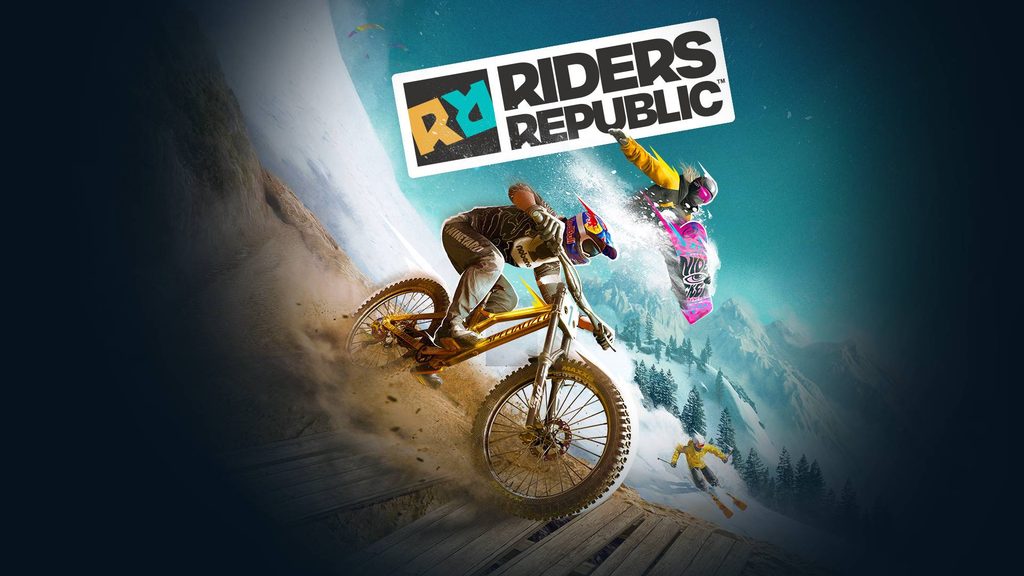
Riders Republic is a massive multiplayer sports playground where players explore and compete across a vast, seamlessly connected world.
Project Overview
My role focused on building the tools, workflows and design methodologies needed to support large-scale content production. I worked across procedural level design, quest creation, exploration features, documentation and team training, collaborating closely with game designers, level designers, programmers and technical artists.
I joined Riders Republic during its concept phase in July 2018 and worked on the project until alpha in January 2020.
In the World
My Work
⌘
PROCEDURAL CONTENT TOOLS
I helped define workflows and procedural rules for tools used by the level design team to build the world and its layouts.
– Work with Leads to propose and design workflow improvements and new tools for the level design team to build world and layouts, including procedural rules, procedural systems’ inteconnections and tool’s UI in Anvil (ubisoft’s engine).
– Work with tools programmers and technical artists to develop new proefficient procedural tools to generate gameplay objects (ramps, jumps, wooden paths, etc), complex procedural road generation based on rational level design rules and manual road editing for bike and ski layouts through Houdini & Anvil.
– Iterate with tool developers (testing and feedback loop)
– Try to balance procedural presets for road generation
◉
QUEST EDITOR & FLOW EDITOR, CONTENT PIPELINE
I contributed to adapting an existing Ubisoft Quest Editor from AC Odyssey to Riders Republic’s specific production needs.
– Working in close relationship with programmers to build the tools and the visual scripting elements & logic
– Building the first game events (playable content/missions) as proof of concept
– Delivering and maintaining quest templates and scripts to be used by level designers and mission integrators.
⌘
TECHNICAL DOCUMENTATION & TEAM TRAINING
– Creating and maintaining the technical documentation for each individual tool to ease their use by level designers and create a centralized knowledge center for dos and donts.
– Creating video tutorials to explain the creation of quests steps by step
– Creating dedicated trainings on tools
– Training each level designer on the new processes and tools until they are « production ready »
– Being a support to the level design team and to the lead level designer
◉
EXPLORATION CONTENT PREFABS
– Prototyping exploration features (workshops interactions, teleports, ski lifts, etc) using the in-house visual scripting system
– Iterating on the implementation of exploration features with gameplay programmers
RATIONAL LEVEL DESIGN
– Working with game designers and level designers to put in place a rational design methodology to create content for the different sports in the game
Design Challenge
Turning complex systems into production-ready tools.
◎
Riders Republic needed to support the creation of a large amount of varied content across multiple sports and traversal types.
The challenge was not simply to create procedural systems, but to make them controllable, understandable and useful to level designers.
▱
Road-generation tools, for example, had to combine procedural generation with rational level design rules while still allowing designers to manually edit the resulting layouts. At the same time, inherited tools such as the Quest Editor had to be adapted to the specific workflows and content requirements of Riders Republic.
◈
My work sat at the intersection of design intent, technical constraints and production usability.
Key Learnings
△
Production scalability requires methodical knowledge sharing
Introducing new tools is not finished when they technically work. Documentation, templates, tutorials, training and ongoing support are essential to turn a prototype into a production workflow.
⌘
Willing to generate everything is madness.
Procedural generation does not replace level design & level art. It works best when procedural systems encode clear rational design principles while preserving enough manual control for designers to shape the final experience.
⚖
Tools are part of the design
A powerful system is only useful if designers can understand, control and iterate with it. Designing the workflow and usability of a tool is therefore as important as designing its underlying rules.
⌁